
How to Clean and Oil a Damascus Knife at Home (Step-by-Step)
Quick Answer
Learn how to clean and oil a Damascus knife at home with this step-by-step guide. Proper care prevents rust, preserves the pattern, and keeps your blade razor-sharp for years.
A Damascus knife is one of the most beautiful tools you can own, but that hand-forged, high-carbon steel requires more attention than a stainless kitchen blade. Without regular cleaning and oiling, moisture and air can reach the steel within a day or two and start surface rust that slowly destroys the very pattern you paid for.
The good news: caring for a Damascus knife takes less than five minutes after each use. This guide walks you through every step, from a quick daily wipe-down to a deep clean when rust spots appear, so your blade stays sharp, protected, and visually stunning for decades.
Need a Damascus knife worth caring for? Louis Martin Custom Knives forges every blade by hand in East Northport, NY. Browse our full collection of handmade Damascus knives or call (631) 898-4249 to discuss a custom order.
Why Damascus Knives Need Special Care
Not all knives are created equal, and pattern-welded Damascus steel is fundamentally different from the stainless steel found in most factory knives.
Damascus is made by forge-welding layers of high-carbon and low-carbon steel together, sometimes 100 to 500 layers, and then acid-etching the blade so the two steels reveal their distinct wavy or ladder pattern. That high-carbon content is exactly what gives Damascus its legendary edge retention and sharpness, but it also means the steel is not stainless.
Unlike factory-made stainless steel knives, a Damascus blade will form a patina naturally and is susceptible to rust if left wet, stored improperly, or touched frequently with bare hands. The oils from your skin are mildly acidic and, over time, can etch the surface in uneven ways.
The protective layer of oil on the blade is your first and most important line of defense.
What You Need to Clean and Oil a Damascus Knife
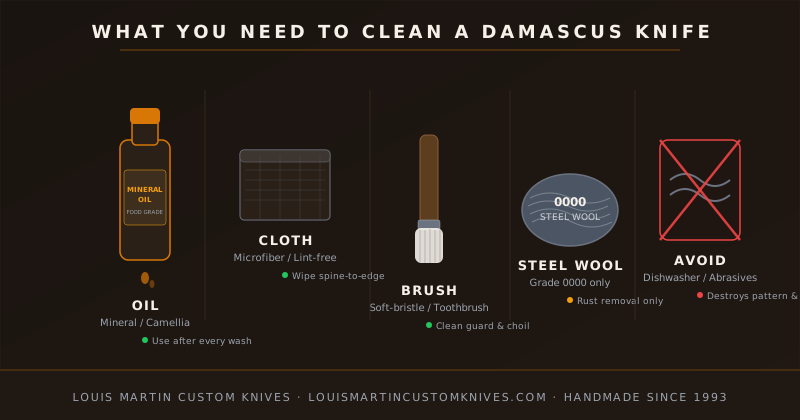
Gather these supplies before you start. You probably have most of them at home already:
For cleaning:
- Warm water and mild dish soap
- Soft cotton cloth or microfiber towel
- Soft-bristle toothbrush (for the ricasso and guard area)
- 0000-grade steel wool (for rust spots only)
- Rust eraser or fine ceramic rod (optional, for light rust)
For oiling:
- Food-grade mineral oil, camellia oil, or Renaissance Wax
- A clean lint-free cloth or cotton pad
- Nitrile gloves (optional, keeps your fingerprints off the freshly oiled blade)
Avoid:
- Abrasive scouring pads or wire brushes (they scratch the pattern)
- Bleach or harsh chemical cleaners (they strip the steel)
- The dishwasher (heat + detergent = rust and cracked handles)
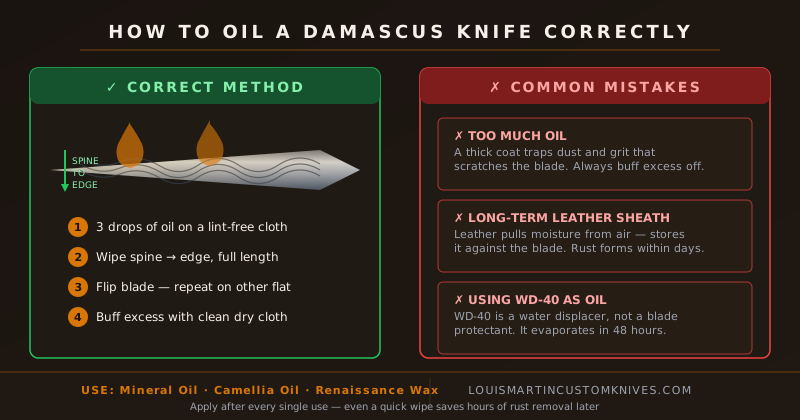
- WD-40 as a long-term protectant (it evaporates and leaves the blade exposed)
Step-by-Step: How to Clean a Damascus Knife
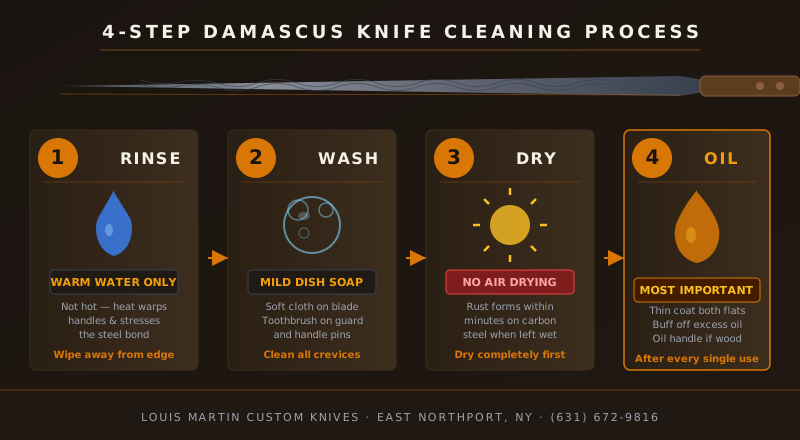
Step 1, Rinse with Warm Water
Hold the blade under warm (not hot) running water to loosen any food debris, blood, or residue. Hot water can expand and contract the metal and wood handle materials rapidly, which weakens the handle-to-tang bond over time.
Use your fingers or a soft cloth to wipe debris away from the edge. Always wipe away from the edge, never toward it, the blade is sharp enough to cut through a cloth easily.
Step 2, Wash with Mild Soap
Apply a small drop of mild dish soap to your soft cloth and wipe the blade from the spine to the edge, working along the length of the knife. Pay special attention to:
- The choil (where blade meets handle)
- The guard or bolster (crevices trap moisture)
- The handle scales near any pins or rivets
A soft-bristle toothbrush is ideal for getting into the guard area without scratching. For full-tang Damascus knives, also clean the exposed tang between the handle scales if there is any gap.
Step 3, Rinse and Dry Immediately
Rinse all soap residue off under warm water. Then dry the blade completely with a clean, dry cloth. Do not let it air-dry, water left on the blade, even for a few minutes, will begin to form rust spots on high-carbon steel.
Pay particular attention to:
- Any engraving or pattern grooves where water pools
- The area around the guard and handle junction
- Both the flat of the blade and the spine
Step 4, Apply a Coat of Protective Oil
This is the most important step. Once the blade is completely dry, apply a thin, even coat of protective oil across the entire blade surface.
How to oil correctly:
- Put a few drops of mineral oil or camellia oil onto a lint-free cloth
- Wipe the blade from spine to edge, covering both flats and the spine
- Use a second clean cloth to buff off any excess, you want a thin film, not a puddle
- Apply oil to the handle material too if it is wood or bone (avoid on synthetic handles)
A light coat of oil applied consistently after every use is far more effective than a thick coat applied once a month.
How to Remove Rust From a Damascus Knife
Even with good habits, surface rust can appear, especially if the knife was stored in a humid environment or sat in a leather sheath too long. Here is how to address it without damaging the pattern.
For light surface rust (orange-brown speckling):
- Apply a small amount of mineral oil to the affected area
- Rub gently with 0000-grade steel wool in the direction of the grain, never circular strokes across the pattern
- Rinse, dry, and re-oil the entire blade
- The pattern will re-emerge once the rust is gone
For heavier rust or pitting:
Light rust that has been left too long can pit the steel surface. At this point, the blade may need professional attention. Contact us at Louis Martin Custom Knives and we can advise you on restoration options.
Rust prevention tip: Our comprehensive knife care guide goes deeper into storage, sharpening, and long-term maintenance for all knife types, worth bookmarking for your collection.
How to Store a Damascus Knife Properly
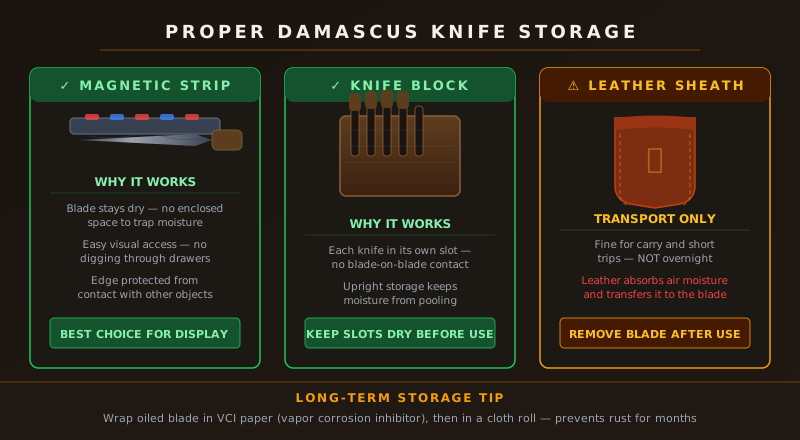
Cleaning and oiling your knife means nothing if you then store it incorrectly. Here are the storage rules for Damascus blades:
Do: Use a Wooden Knife Block or Magnetic Strip
Both keep the blade exposed to air (not enclosed in moisture-trapping materials) while protecting the edge. Make sure the block slots are dry before inserting the knife.
Do: Use a Dry Leather Sheath for Short-Term Storage
A quality leather sheath is fine for transport and short-term carry. However, never store a Damascus knife in a leather sheath long-term, leather naturally pulls moisture from the air and transfers it to the blade, creating rust spots within days.
Don’t: Store in a Drawer Without a Guard
Knives rattling loose in a drawer get their edges chipped and dulled. Use a blade guard or roll if storing in a drawer.
Don’t: Store Near a Sink or in a Humid Environment
Kitchens and bathrooms have elevated humidity. Store your Damascus chef knife away from the sink and dishwasher, on the opposite wall or in a closed cabinet with a desiccant packet.
For long-term storage (months or more), wrap the oiled blade in a piece of wax paper or VCI paper (vapor corrosion inhibitor paper), then in a cloth roll. This creates an anti-corrosion microenvironment around the blade.
Oiling the Handle: Wood, Bone, and Synthetic Materials
Your Damascus knife’s handle needs care too. Different handle materials have different requirements:
Stabilized or natural wood handles, Apply a light coat of food-grade mineral oil or beeswax once a month. Wood that dries out can crack along the grain or at the pin holes, loosening the handle. Our guide to custom knife handle materials covers every material type in detail.
Bone or antler handles, Wipe with a lightly oiled cloth. Bone is porous and benefits from occasional conditioning with a small amount of mineral oil.
G10 or Micarta handles, These synthetic materials need no oiling. Just rinse and dry. They are impervious to moisture and virtually maintenance-free.
Leather-wrapped handles, Condition with a leather balm or saddle soap once every few months to prevent cracking and drying.
How to Maintain the Damascus Pattern
One of the most common concerns Damascus knife owners have is losing the visual pattern over time. Here is the reality:
The pattern in a properly made Damascus blade runs through the full thickness of the steel, it is not a surface coating or acid print. As long as you are not grinding or re-profiling the blade, the pattern is permanent.
What can dull the visual contrast of the pattern:
- Prolonged exposure to cooking oils or food acids without cleaning
- Over-polishing with a high-grit compound (removes the acid-etch)
- Thick rust that pits the surface
What enhances the pattern over time:
- A natural patina developing on the high-carbon areas (darkens the contrast)
- Regular oiling which keeps the steel conditioned and the etched texture clean
If your pattern looks faded, a light re-etch with ferric chloride solution can restore the contrast. This is an advanced step, contact us or your knifemaker before attempting it.
When to Sharpen vs. When to Clean
Cleaning and sharpening are separate tasks, but people often confuse a dull edge with a dirty one. Here is how to tell the difference:
- Clean but dull: The blade passes the paper test (slices paper cleanly) but feels sluggish on vegetables or meat. This means the edge geometry is still there but the apex has rolled. Time to strop or sharpen.
- Sharp but dirty: The blade is still razor-sharp but has spots, residue, or the pattern is obscured. Clean and oil first, sometimes all the knife needs.
- Both: After a hunt or heavy outdoor use, always clean first, then sharpen, then oil. Sharpening a dirty blade embeds debris in your sharpening stones.
Our knife steel guide has more on matching your sharpening method to your specific Damascus steel type.
Damascus Knife Cleaning, Quick Reference
| Task | Frequency |
|---|---|
| Wipe with dry cloth | After every use |
| Full wash and oil | After every use involving food, blood, or moisture |
| Handle conditioning (wood/bone) | Monthly |
| Deep clean and rust inspection | Every 3 months |
| Re-oil for long-term storage | Before any storage longer than a week |
Shop Damascus Knives at Louis Martin Custom Knives
Every knife we make at Louis Martin Custom Knives is hand-forged by a master craftsman in East Northport, New York, using traditional pattern-welding methods refined over three generations. Our blades are built to last a lifetime, and with the care routine in this guide, they will.
Browse our Damascus knife collections:
- Damascus Hunting Knives, Field-ready blades for hunters and outdoor enthusiasts
- Damascus Skinning Knives, Curved, gut-hook, and drop-point profiles for game processing
- Damascus Chef Knives, Kitchen blades that are as functional as they are beautiful
- Damascus Everyday Carry, Compact folding and fixed-blade EDC knives
- Full Shop, All Damascus Knives
Want a custom piece? Contact us at (631) 898-4249 or submit an inquiry for a bespoke Damascus knife built to your specifications, handle material, blade profile, steel combination, and engraving included.
Dealers and shops: If you carry or plan to carry handmade Damascus knives, apply for our wholesale program, dealer pricing up to 40% off with no minimum on first orders.
Related Reading
Frequently Asked Questions
How often should I clean a Damascus knife? +
Clean your Damascus knife after every use. Even minimal exposure to moisture, food acids, or fingerprints can start surface rust on high-carbon Damascus steel within 24 to 48 hours. A quick wipe-down with a dry cloth after each use takes seconds and prevents hours of rust removal later.
What oil should I use on a Damascus knife? +
Food-grade mineral oil, camellia oil, or Renaissance Wax are the safest choices for Damascus blades. Avoid WD-40 for long-term storage, it is a water displacer, not a true protectant. For kitchen Damascus knives, always use food-safe oil.
How do I remove rust from a Damascus knife without damaging the pattern? +
Use 0000-grade steel wool or a rust eraser with light circular strokes along the grain of the pattern. Never use power tools or coarse abrasives, they will flatten the pattern's texture. Follow up with a fresh coat of oil immediately after.
Can I put a Damascus knife in the dishwasher? +
Never put a Damascus knife in the dishwasher. The high heat, harsh detergents, and prolonged moisture will strip the protective oil layer, accelerate rust, and can warp or crack organic handle materials like wood or bone. Always hand-wash in warm soapy water and dry immediately.
Will oiling a Damascus knife remove the dark pattern? +
No. The dark lines in Damascus steel are created by the differential acid-etching of two steel types during the forging process, they are structural, not a surface coating. Regular oiling actually helps preserve and deepen the contrast of the pattern over time.
Shop the Collection
Browse our handmade Damascus Knives