
How to Store Knives Safely, Wall Mounts, Blocks and Sheaths
Quick Answer
Learn how to store knives safely using magnetic wall mounts, knife blocks, blade sheaths, and knife rolls. The right storage protects your edge, prevents accidents, and extends blade life.
A knife is only as useful as it is sharp, and the single most common reason knives go dull before their time is improper storage. A blade tossed loosely in a drawer bangs against spoons and can openers with every reach, chipping the edge and rolling the apex. A Damascus knife left in a leather sheath for a month will come out with rust spots, regardless of how perfectly it was cared for the day before.
Proper knife storage protects three things simultaneously: your edge, your safety, and the life of the blade. This guide covers every method, magnetic wall strips, knife blocks, blade sheaths, knife rolls, and the specific rules that apply to Damascus and high-carbon custom knives.
Need a blade worth storing right? Louis Martin Custom Knives hand-forges every piece at its own facility. Browse the full Damascus knife collection or request a custom piece.
Why Proper Knife Storage Matters
Every time a blade touches something it shouldn’t, another knife, a utensil, the inside of a bare drawer, the edge rolls or chips at a microscopic level. This damage is cumulative and mostly invisible until the knife suddenly feels dull despite never having been sharpened.
Beyond edge damage, improper storage creates safety risks. A knife falling from a poor mount, or a hand reaching into a drawer and contacting a blade unexpectedly, are among the most common household knife accidents.
For handmade Damascus knives and custom hunting knives made from high-carbon steel, there is an additional concern: moisture. Unlike stainless steel, high-carbon Damascus will begin to rust within 24 to 48 hours if stored in a way that traps moisture, inside a damp leather sheath, in a humid drawer, or in a display case without airflow. Read our Damascus knife cleaning and oiling guide for the full care routine before storage.
Option 1: Magnetic Wall Strips
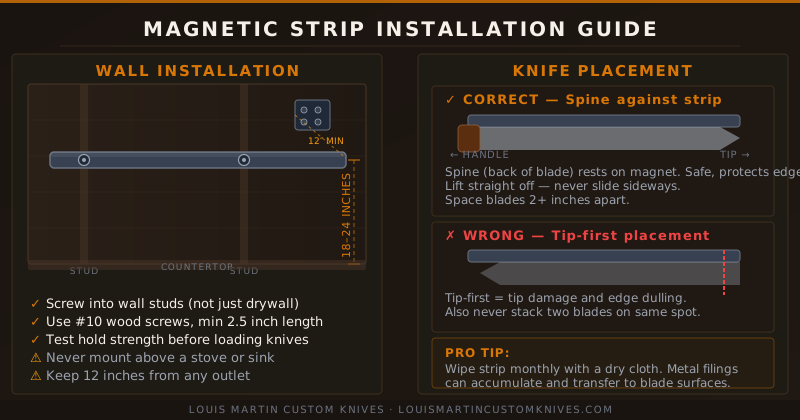
A magnetic knife strip is a horizontal bar of strong magnets mounted on the wall. Knives hang from it with the flat of the blade (or the spine) resting against the magnetic surface, blades pointing down or to the side.
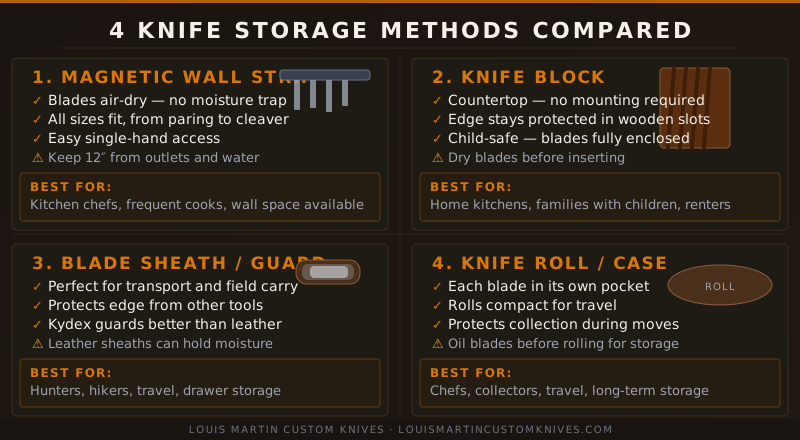
Advantages:
- Blades are exposed to air on all sides, no moisture trapping
- Works for any blade size, from a 3-inch paring knife to a 12-inch chef knife
- Knives are visible and immediately accessible with one hand
- Easy to clean (wipe the bar monthly to remove metal filings)
Installation requirements:
- Mount into wall studs using #10 wood screws at least 2.5 inches long, never anchor only in drywall
- Position 18 to 24 inches above the countertop
- Keep at least 12 inches from any electrical outlet or switch
- Never mount directly above a stove, sink, or dishwasher vent
How to place knives correctly: Place the spine (back edge) of the blade against the magnet first, then lower the knife so the flat rests on the bar. Lift straight off when retrieving, never slide the blade sideways along the strip, which will contact the edge and dull it. Space knives at least two inches apart so edges never touch each other.
This method works especially well for Damascus chef knives and everyday carry fixed blades that you reach for daily. The blade stays aired, the pattern stays visible, and there is no repeated contact with any surface except the spine.
Option 2: Knife Blocks
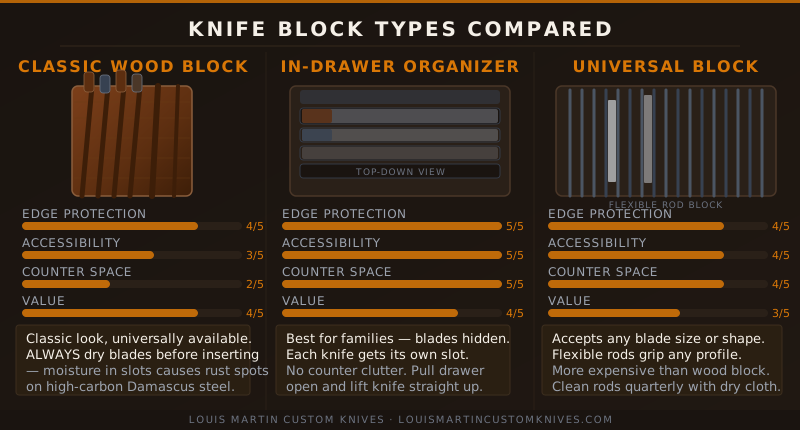
A knife block keeps blades separated in individual slots while keeping them off the counter surface and away from other utensils. There are three main types:
Classic Wood Block
The traditional countertop knife block holds 5 to 8 knives in angled wooden slots. It is universally available, safe (blades fully enclosed), and works well for a standard kitchen knife set.
Critical care note for high-carbon and Damascus blades: Always dry your blade completely before inserting it into a wood block. Wooden slot walls are excellent moisture traps. A Damascus knife slid into a slot with any water remaining on the blade will develop rust spots on the areas that contact the wood within 24 hours.
Our knife care guide goes into detail about the specific drying and oiling routine recommended before any storage.
In-Drawer Knife Organizer
An in-drawer organizer eliminates counter clutter and keeps every blade in its own padded slot. Each knife lies flat with full edge protection. This is the safest option for homes with children because there are no handles visible or reachable.
The main requirement is that the organizer fits your longest blade. A 10-inch chef knife needs at least a 10-inch drawer slot, with 1 to 2 additional inches for the handle.
Universal (Flexible Rod) Block
Universal knife blocks use vertical flexible rods instead of fixed slots, allowing any blade shape or size to be inserted. These blocks can hold serrated knives, oddly shaped custom blades, and Damascus skinning knives with unusual profiles that don’t fit standard slots. They are more expensive than wood blocks but more versatile.
Clean the rod interior every few months by tipping the block upside down and tapping out any crumbs or debris. Metal shavings can accumulate between rods and scratch blades.
Option 3: Blade Sheaths and Edge Guards
A blade sheath or edge guard covers only the cutting edge, leaving the handle exposed. This is the preferred solution for individual knife protection when other storage systems are not available, or for knives stored in a toolbox, pack, or range bag.
Leather sheaths have been used for centuries and provide good edge protection and a traditional look. They are standard with custom hunting knives and skinning knives because they protect the edge during field carry and are rugged enough for outdoor use. However, leather is hygroscopic, it absorbs moisture from air and contact, which makes it unsuitable for long-term storage of Damascus or high-carbon steel. Short-term carry: fine. Storing for more than a day: oil the blade first, and switch to a drier option.
Kydex sheaths are a molded thermoplastic alternative to leather. They are moisture-resistant, light, and hold the knife securely with a satisfying click. Kydex is the superior choice for Damascus knives when field carry is required, since it does not hold moisture against the blade. Our custom knife handle materials guide covers complementary materials that pair well with Kydex for complete knife systems.
Plastic blade guards are simple slip-on covers, usually sold individually or in sets. They are inexpensive and effective for drawer storage, keeping edges from contacting other utensils. If you must store knives in a bare drawer, blade guards are the minimum acceptable protection.
Option 4: Knife Rolls and Travel Cases
A knife roll is a fabric, leather, or canvas organizer with individual pockets for each knife, designed to roll up compactly for transport. Knife cases are rigid versions of the same concept, used by chefs for commuting and collectors for moving or displaying collections.
Advantages:
- Every knife in its own pocket, edges never touch each other
- Rolls compact to a fraction of the unrolled size
- Protects your full knife collection during travel, moves, or display events
- Good moisture management if paired with a desiccant packet inside the roll
Storage rule for rolls: Oil every blade before rolling for storage of more than a few days. Fabric pockets in rolls are better than leather sheaths for moisture management, but they still hold some atmospheric humidity if stored in a closed environment. Add a silica gel desiccant packet to any closed roll or case you won’t be opening frequently.
Storage Rules for Damascus and High-Carbon Knives
Pattern-welded Damascus steel and other high-carbon alloys used in handmade custom knives do not have the corrosion-resistance of stainless steel. The same high-carbon content that gives these blades their extraordinary edge retention and sharpness also makes them reactive to moisture and oxygen.
These five rules apply specifically to Damascus and high-carbon knife storage:
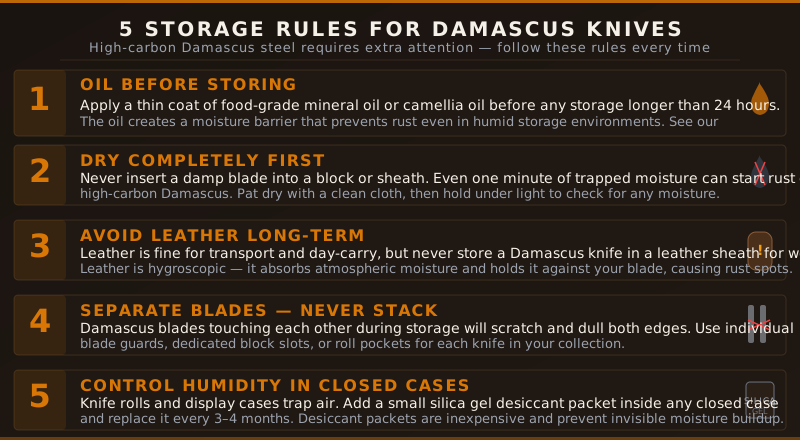
1. Oil before storing. Apply a thin coat of food-grade mineral oil, camellia oil, or Renaissance Wax to the entire blade before any storage lasting more than 24 hours. This is the single most important step. See our detailed Damascus knife oiling guide for the correct technique.
2. Dry completely first. Never insert a damp blade into a block, sheath, or roll. Even brief trapped moisture causes rust spots on Damascus steel. Pat dry with a clean cloth and hold the blade under a light to confirm no moisture remains before storing.
3. Avoid leather long-term. Leather is fine for day-carry but not for multi-day storage. Store Damascus knives in a Kydex sheath, knife roll, magnetic strip, or block when not in field use.
4. Separate blades. Never store two Damascus blades where they can touch each other. Blade-on-blade contact scratches both surfaces and damages the edge. Use individual pockets, block slots, or blade guards between every knife.
5. Control humidity in closed cases. Add a silica gel desiccant packet to any closed knife roll, display case, or transport case. Replace the packet every 3 to 4 months. This is especially important in climates with high year-round humidity, or for knives stored in basements, garages, or vehicles.
Understanding the steel in your knife also helps you choose the right storage. Our knife steel guide explains how different alloys respond to storage conditions.
What Never to Do
A few common mistakes that shorten knife life and create safety hazards:
- Loose in a drawer, contact with other utensils dulls the edge and risks cutting you when you reach in
- Dishwasher, high heat, harsh detergent, and prolonged moisture destroy both blade and handle; never put a Damascus or high-carbon knife in a dishwasher
- Wet sheath or block, traps moisture against the blade, causing rust within hours on high-carbon steel
- Stacking knives, placing one blade on another chips both edges
- Left-in-scabbard storage, leaving a Damascus hunting knife in its leather scabbard after field use without cleaning and oiling first will produce rust spots by the next day
Knife Storage, Quick Reference
| Storage Method | Best Use | Edge Protection | Child Safety |
|---|---|---|---|
| Magnetic wall strip | Daily-use kitchen knives | ★★★★☆ | ★★★☆☆ |
| Wood knife block | Counter storage, sets | ★★★★☆ | ★★★★☆ |
| In-drawer organizer | Family kitchens, no counter space | ★★★★★ | ★★★★★ |
| Blade sheath / guard | Transport, drawer use | ★★★★☆ | ★★★★☆ |
| Knife roll | Travel, collection, long-term | ★★★★★ | ★★★☆☆ |
Shop Custom Knives at Louis Martin Custom Knives
Every knife we build is designed with full-tang construction, high-carbon Damascus or tool steel, and handle materials chosen to last a lifetime. Proper storage keeps them performing that way.
Browse by use:
- Damascus Hunting Knives, field-ready blades for hunters and outdoorsmen
- Damascus Skinning Knives, drop-point and gut-hook profiles for game processing
- Damascus Chef Knives, kitchen blades that reward good storage habits with lasting sharpness
- Everyday Carry Knives, compact fixed and folding blades for daily use
- Full Shop, browse the complete collection
Ready to order custom? Call (631) 898-4249 or submit a custom order request, we build to your spec, including handle material, blade profile, and steel combination.
For dealers and retailers: Apply to our wholesale program for dealer pricing on handmade Damascus knives with no minimum on first orders.
Related Reading
- How to Clean and Oil a Damascus Knife at Home, the full cleaning and oiling routine before storage
- Damascus Knives, Everything You Need to Know, why Damascus steel needs more care than stainless
- Full Tang vs. Partial Tang Knives Explained, how tang construction affects which storage fits best
- Custom Knife Handle Materials Guide, handle material determines sheath and storage compatibility
- Exploring the Types of Steel in Handmade Knives, how steel type determines rust risk and care requirements
- Hand-Forged Damascus Knives, the knives worth storing right
Frequently Asked Questions
What is the best way to store kitchen knives? +
Magnetic wall strips and in-drawer organizers are both excellent choices for kitchen knives. Magnetic strips keep blades aired and accessible, while in-drawer organizers protect the edge completely and are safer for homes with children. Avoid storing kitchen knives loose in a drawer, contact with other utensils dulls the edge quickly.
Is it bad to store knives in a drawer? +
Storing knives loose in a drawer without guards is bad for both the blade and your fingers. Rattling against other utensils dulls the edge and chips the tip. However, an in-drawer knife organizer (a block or foam insert designed for drawer storage) is actually one of the safest and most child-safe methods available.
How far from an outlet should a magnetic knife strip be? +
Install a magnetic knife strip at least 12 inches (30 cm) from any electrical outlet or switch. Also avoid mounting above a stove, near a dishwasher vent, or over a sink, moisture and heat from these sources corrode both the strip hardware and the blade finish over time.
Can I store a Damascus knife in a leather sheath long-term? +
No. Leather is hygroscopic, it absorbs moisture from the air and holds it against the blade surface. Short-term carry (hours to a day) in a quality leather sheath is fine, but storing a Damascus or any high-carbon knife in leather for more than a day or two will cause rust spots to develop, even if the blade was oiled. Use a Kydex sheath, a wax-paper wrap, or a knife roll for long-term storage.
What is the safest knife storage for homes with children? +
In-drawer knife organizers are the safest option for families with children because the blades are completely enclosed and out of reach. If wall storage is preferred, a magnetic strip installed high on the wall (above countertop height for small children) and kept away from edges of counters is also safe when used responsibly. Knife blocks on countertops are generally safe but require that children are taught not to pull handles.