
How to Remove Rust From a Damascus Knife
Quick Answer
Step-by-step guide to safely removing surface rust and pitting from Damascus steel knives using a rust eraser, baking soda paste, or 0000 steel wool, without damaging the layered pattern.
Damascus steel is high-carbon steel, reactive, edge-holding, and beautiful. It is also the most rust-prone knife steel in common use. Even a well-cared-for Damascus blade can develop surface rust after a single humid night left undried. The good news: rust on Damascus is almost always fixable at home, and removing it correctly will not damage the pattern.
This guide covers how to identify what type of rust you are dealing with, the right tools and methods for each severity level, and how to prevent it from coming back. Every Louis Martin Damascus knife is made from genuine high-carbon Damascus billets, the care in this guide applies to all of them.
Step 1, Identify the Type of Rust
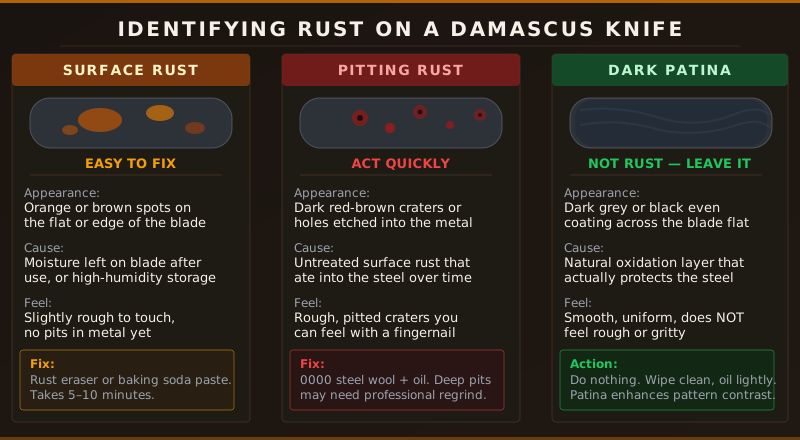
Not every dark spot on a Damascus blade is rust, and not all rust requires the same response. Before reaching for any cleaning product, identify what you are actually looking at.
Surface Rust (Orange or Brown Spots)
What it looks like: Orange, reddish-brown, or rust-colored spots on the flat or edge of the blade. The spots may be raised slightly and feel rough when you run a fingernail across them.
What caused it: Moisture left on the blade after use, cutting acidic foods (citrus, onion, tomato) and not washing immediately, or storing in a humid environment. High-carbon Damascus can develop surface rust within 12–24 hours in the right conditions.
How serious is it: Not serious at all if caught early. Surface rust has not yet penetrated the steel, it is sitting on top of the metal layer, not eating into it.
Fix: Rust eraser or baking soda paste. Takes 10–15 minutes.
Pitting Rust (Dark Craters)
What it looks like: Dark red-brown craters or holes that are physically embedded in the steel surface. You can feel the divots with your fingernail. The pits do not wipe away.
What caused it: Surface rust left untreated for weeks or months. The oxidation reaction continued eating into the steel, creating physical damage.
How serious is it: More serious. The pits are permanent physical damage, you can clean out the rust, but the divots in the metal remain. Very deep pitting may require professional regrinding.
Fix: 0000 steel wool with mineral oil, followed by re-etching if the pattern was affected.
Dark Patina (Leave It Alone)
What it looks like: A dark grey, charcoal, or near-black even coating across the flat of the blade. It is smooth, not rough, and does not rub off on your finger as orange dust.
What it is: Natural oxidation of the high-carbon layers, accelerated by the acid used to etch the pattern. This patina is protective, it is a stable oxide layer that actually slows down future rust formation.
What to do: Nothing. Wipe clean with a dry cloth, apply a light coat of oil, and leave it. Patina also deepens the visual contrast between the dark and bright layers of the Damascus pattern, making it look better over time.
Read our how to clean and oil a Damascus knife guide for the full routine on maintaining the patina and preventing new rust.
What You Need
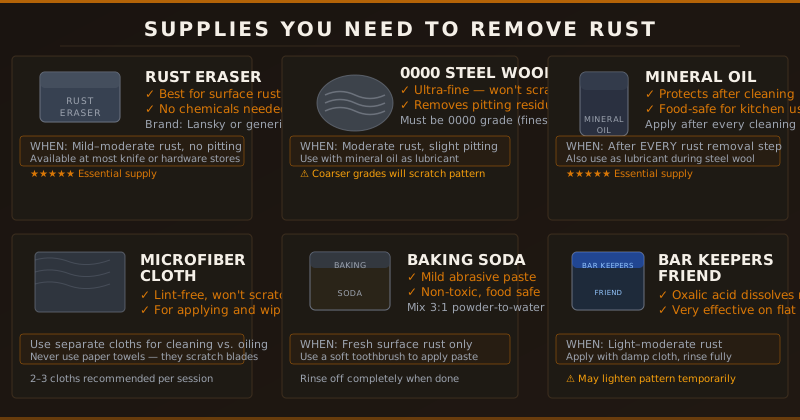
You do not need any specialized chemicals for most rust removal. The supplies below cover every severity level:
- Rust eraser, a block of abrasive material that removes rust on contact. Available at most knife shops or hardware stores. Lansky makes a reliable one.
- 0000 steel wool, ultra-fine grade only. Coarser grades will scratch the pattern surface.
- Food-safe mineral oil, for protection after cleaning. Apply immediately after any rust removal step.
- Baking soda, mixed with water into a paste for light surface rust. Mild, non-toxic, safe for kitchen knives.
- Bar Keepers Friend (optional), contains oxalic acid, which dissolves rust chemically. Effective on moderate rust. Rinse completely after use.
- Microfiber cloths, 2–3 per session. Never use paper towels, which scratch blade surfaces.
Rust Removal Methods by Severity
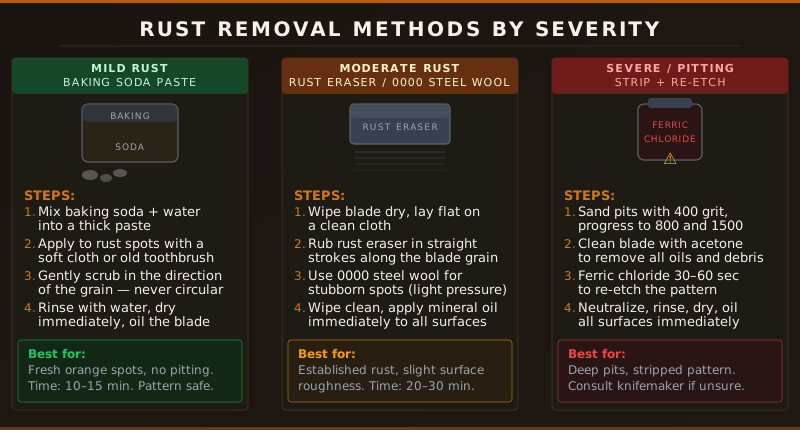
Method 1: Mild Surface Rust, Baking Soda Paste
Best for fresh orange spots with no roughness or pitting. Safe to use on the flat of the blade near the pattern.
- Mix three parts baking soda with one part water to form a thick paste.
- Apply the paste to the rust spots using a soft cloth or old soft-bristle toothbrush.
- Scrub in straight strokes along the grain of the blade, never in circles. Circular motion creates cross-grain scratches that damage the pattern.
- Work in short sessions of 30–60 seconds and check progress. The orange rust will lift onto your cloth.
- Rinse with clean water and dry the blade immediately and completely.
- Apply a thin coat of mineral oil to the entire blade before storing.
Time: 10–15 minutes. Pattern safety: Completely safe.
Method 2: Moderate Rust, Rust Eraser or 0000 Steel Wool
For established rust with slight surface roughness, or spots that did not fully respond to baking soda.
- Wipe the blade dry. Lay it flat on a clean folded microfiber cloth on a stable surface.
- Apply a small amount of mineral oil to the rust area as a lubricant.
- Rub the rust eraser or a pad of 0000 steel wool in firm, straight strokes along the blade grain. Do not press hard, let the abrasive do the work.
- Wipe away the rust residue with a clean section of cloth. Check progress every 30 seconds.
- Once the rust is gone, wipe the entire blade clean with a fresh cloth.
- Apply mineral oil generously to all surfaces. Allow to soak for 2–3 minutes, then wipe off the excess.
Time: 20–30 minutes. Pattern safety: Safe when kept to straight strokes on the affected area only.
Method 3: Severe Pitting Rust, Strip and Re-Etch
For deep pitting that has physically damaged the blade surface and/or obscured the pattern. This method is more involved and is worth consulting your knifemaker about before attempting.
- Sand the pitted area progressively: start at 400 grit wet-dry sandpaper, work up to 800, then 1500 grit. Use straight strokes along the blade grain. This removes the rust from inside the pits and levels the surrounding surface.
- Wipe clean with a lint-free cloth.
- If the pattern has been significantly affected, a light ferric chloride re-etch (30–60 seconds) will restore contrast. Clean the blade with acetone first to remove all oil, then apply the diluted ferric chloride solution.
- Neutralize the acid with a baking soda-and-water rinse, then clean water.
- Dry completely and apply a heavy coat of mineral oil immediately.
Time: 1–2 hours. Pattern safety: Pattern will be restored by re-etching if done correctly. Consult a knifemaker if you are unsure about step 3.
For context on how the acid etch creates the pattern in the first place, see our guide on Damascus knives: everything you need to know.
Preventing Rust From Coming Back
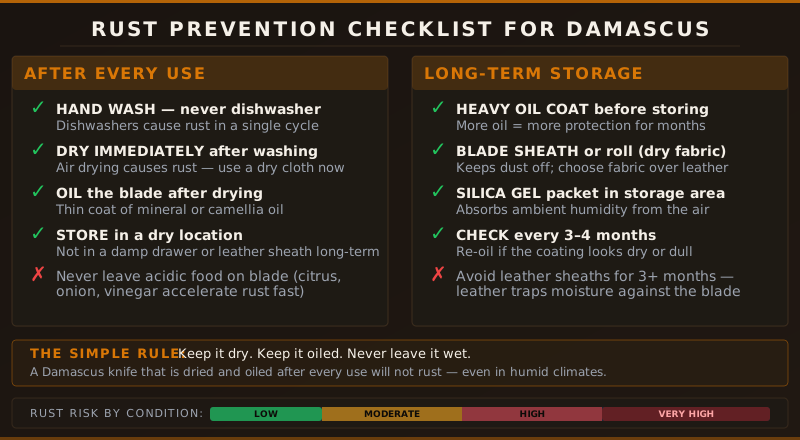
The single most effective thing you can do is dry the blade immediately after every use and apply a thin coat of oil before storing. That one habit prevents the vast majority of rust issues on Damascus steel.
After Every Use
- Hand wash only. Dishwashers will rust a Damascus blade in a single cycle, the combination of high heat, water, and detergent strips all protective oil and causes immediate oxidation.
- Dry immediately. Do not leave the blade on a drying rack or dish towel. Dry it by hand with a microfiber cloth right after washing.
- Oil the blade. Even a quick wipe with an oiled cloth before storage is enough. Use food-safe mineral oil or camellia oil for kitchen knives. Our knife care guide covers the full oiling routine.
- Do not leave acidic food on the blade. Citrus juice, onion, vinegar, and tomato are all acidic and accelerate rust rapidly. Wipe the blade clean during prep if switching between acidic and non-acidic ingredients.
For Long-Term Storage
- Apply a heavier coat of oil before storing for more than a few days.
- Store in a dry location, not in a damp drawer or inside a leather sheath for extended periods. Leather traps moisture against the blade.
- A silica gel packet placed in your knife storage area absorbs ambient humidity and significantly reduces rust risk.
- Check knives every 3–4 months when in long-term storage, and re-oil if the coating looks dry.
Proper storage setup is covered in detail in our how to store knives safely guide, including the right storage options for Damascus specifically.
When to Contact the Knifemaker
Most rust issues are fully fixable at home. But there are situations where professional attention is the right call:
- Deep pitting across a large area of the blade, regrinding to remove the pits may be necessary
- Pitting that has damaged the edge geometry, the bevel may need to be reproduced
- Loss of the Damascus pattern over a significant area, re-etching at home carries risk of uneven results on large sections
All Louis Martin Custom Knives Damascus blades are hand-forged and can be serviced or re-finished. If you have a blade that has been neglected and needs professional attention, reach out through the contact page.
If you are a retailer carrying or considering handmade Damascus knives, our wholesale program includes care guidance for your customers. See also our knife steel guide for technical details on the high-carbon steels used in Damascus billets.
Rust on a Damascus knife is a problem, but it is almost never a permanent one. Catch it at the orange-spot stage, spend 15 minutes with a rust eraser and mineral oil, and the blade will look exactly as it did before. The key is not waiting, the longer rust sits, the deeper it goes. Dry it, oil it, and check it occasionally, and you will rarely need to do more than that.
Frequently Asked Questions
Can rust ruin the Damascus pattern permanently? +
Surface rust that is caught early will not damage the pattern at all. Deep pitting rust that goes untreated for months can physically remove the metal that holds the pattern, leaving craters the acid etch cannot restore. The pattern is safe as long as you treat rust before it progresses to pitting stage.
What is the fastest way to remove rust from a Damascus knife? +
A rust eraser is the fastest method for surface rust, most spots come off in under 10 minutes with no chemicals. For slightly heavier rust, a paste of baking soda and water applied with a soft toothbrush and scrubbed in straight strokes works in 15–20 minutes. Both methods are safe for the Damascus pattern.
Will removing rust affect the Damascus pattern? +
As long as you work only on the rust spots and use straight strokes along the blade grain, never circular motions, the pattern is safe. Avoid sanding or polishing the flat of the blade beyond the affected area. The pattern lives in the depth of the acid etch; light rust removal does not reach it.
Is WD-40 safe to use on a Damascus knife? +
WD-40 can be used in a pinch to displace moisture and loosen light rust, but it is not a long-term protector and leaves a residue that attracts dirt. Use food-safe mineral oil or camellia oil for regular oiling and protection after rust removal.
How do I know if my blade has rust or just a dark patina? +
Rust feels rough and gritty, has orange or red-brown coloring, and rubs off as orange dust on your finger. Patina is smooth, dark grey or black, and does not rub off. Patina is actually protective, do not try to remove it. Only treat areas that feel rough or show orange coloring.